
Your Legal Framework Under Title 10
DCAA operates as the exclusive internal audit function for Department of Defense contracts, with statutory authority established under Title 10, U.S.C., Section 191. This means when you contract with DoD, DCAA auditors have legally defined access to your books, records, and facilities—not as a courtesy, but as a regulatory requirement. DCAA audits are required to be performed in accordance with generally accepted government auditing standards, known as the ‘Yellow Book.’
Three Compliance Regimes You’ll Navigate
Your contract performance sits at the intersection of three overlapping regulatory systems. These three regimes are part of the broader set of federal regulations governing government contracting.
FAR (Federal Acquisition Regulation): Sets baseline contracting rules across all federal agencies. Cost Accounting Standards, established by the Cost Accounting Standards Board and incorporated into Title 48 of the Code of Federal Regulations, are also critical for ensuring compliance with FAR.
DFARS (Defense Federal Acquisition Regulation Supplement): Adds DoD-specific requirements on top of FAR, including cybersecurity, small business protections, and flow-down clauses to your subcontractors.
Cost Accounting Standards (CAS): Establishes the mathematical consistency requirements for how you allocate costs. Violations here generate findings even when underlying invoices are accurate—DCAA examines whether your allocation methodology matches your disclosed practices. CAS requires contractors to consistently follow disclosed cost accounting practices and disclose in writing their accounting practices to contracting officers.
The Three-Year Audit Lookback Window
DCAA’s audit rights extend three years from invoice submission. This means an invoice submitted in January 2021 remains auditable through January 2024. You cannot safely dispose of supporting documentation before this window closes. Auditors routinely examine: DCAA also performs real-time labor evaluations, which are unannounced visits to verify timekeeping controls and labor charges. While DCAA does not have the authority to select contractors for federal contracts, its audit findings and recommendations significantly influence the selection process.
- Labor charging patterns and time tracking systems
- Overhead rate calculations and allocation bases
- Direct cost classifications
- Indirect cost accumulation methodologies
Real-Time Documentation Creates Audit Defensibility
The difference between a clean audit and material findings often comes down to documentation contemporaneity. When timesheets, cost allocations, and overhead calculations are recorded in real-time—not reconstructed months later—DCAA auditors find fewer inconsistencies to challenge.
Specifically, systems should capture:
- Employee labor distribution at or near time of work
- Cost center assignments that match your disclosed allocation methodology
- Overhead rate recalculations on your established schedule (typically quarterly)
Retrofitted documentation raises auditor skepticism regardless of accuracy.
CAS Thresholds Determine Your Compliance Obligations
Your CAS applicability depends on contract value and cumulative DoD awards:
- Below $2 million annually: Exempt from most CAS requirements
- $2-7.5 million: Modified CAS requirements (4 specific standards)
- Above $7.5 million: Full CAS compliance with all 19 standards
CAS requirements and cost allocation methods must be applied at the specific contract level to ensure proper compliance with regulations.
Exceeding these thresholds creates new disclosure requirements. A contractor at $2.4 million in cumulative awards cannot use the same simplified cost allocation as one at $1.8 million—the obligations differ materially.
Converting Audit Findings Into Corrective Action
When DCAA issues a finding, your response timeline matters. Most audit reports provide 30 days for initial management response. Effective responses: DCAA audit findings and recommendations are used by contracting officers to negotiate fair prices and disallow unsupported costs.
- Acknowledge the specific audit observation
- Explain root cause (system gap, training gap, or one-time error)
- Detail corrective measures with implementation dates
- Provide evidence of remediation for findings identified in prior audits
Contract performance standing depends partly on your audit history. Repeated findings in the same area signal systemic weakness and can trigger increased audit frequency or more restrictive contracting terms on future awards.
DCAA: Statutory Authority and Organizational Framework
Legal Foundation
The Defense Contract Audit Agency operates under Title 10, U.S.C., Section 191, establishing it as a designated Defense Agency with explicit congressional authority. This statutory grounding provides DCAA with its legal mandate to conduct contract audits across the Department of Defense.
Role as DoD’s Sole Contract Audit Organization
DCAA functions as the Department of Defense’s exclusive internal contract audit organization. This centralized structure eliminates fragmentation that would occur with multiple competing audit agencies and ensures consistent audit standards across all DoD components.
Since its establishment, DCAA has maintained this singular audit authority within the defense sector.
Core Mission and Responsibilities
The agency’s operational focus encompasses two primary functions:
- Contract Audits: DCAA conducts audits of defense contracts to verify compliance with regulatory requirements and assess contractor performance.
- Accounting and Financial Advisory Services: The agency provides accounting and financial advisory services to DoD components, supporting contract negotiation, administration, and settlement processes, as well as overall financial management. These services are independent and professional, ensuring that DoD personnel involved in contract negotiation and administration receive accurate financial insights.
DCAA’s audit authority is further defined through the Federal Acquisition Regulation, which establishes the procedural framework for how audits are initiated and conducted across the federal contracting ecosystem.
Structural Independence
DCAA maintains organizational separation from DoD acquisition and procurement functions—a structural requirement that preserves audit objectivity.
This independence prevents conflicts of interest and ensures that audit recommendations remain free from the influence of acquisition decision-makers. Auditors operate without incentive to favor procurement outcomes, thereby strengthening the credibility of audit findings and advisory services.
This segregation of duties protects both DoD stakeholders and contractors by ensuring audits reflect genuine financial and compliance assessments rather than procurement preferences.
DCAA Contract Audit Authority and Scope
Breadth of DCAA Jurisdiction
The Defense Contract Audit Agency operates under statutory authority spanning all Department of Defense contracting activities. This includes: DCAA conducts extensive reviews of contractors’ accounting systems to ensure compliance with federal regulations. The DCAA was established in 1965 to standardize and conduct audits for the DoD.
- Military Departments
- Joint Chiefs of Staff
- Combatant Commands
- Defense Agencies
- Other DoD organizational components
Core Audit Functions
DCAA performs two primary functions:
1. Contract Audits
DCAA examines contracts and subcontracts across multiple vehicle types:
- Cost-reimbursement contracts
- Incentive contracts
- Time-and-materials contracts
- Labor-hour contracts
- Price re-determinable contracts
Timekeeping issues are one of the most common challenges identified during DCAA audits.
2. Accounting Advisory Services
The agency provides guidance to procurement officials on financial compliance and accounting practices.
Audit Methodology and Timeline
DCAA conducts examinations during three distinct periods:
- Active performance – ongoing review of contract execution
- Contract completion – final verification phase
- Post-completion – historical record examination
Auditors verify two primary elements: cost allowability under applicable regulations and adherence to accounting compliance standards. Small businesses should establish accounting system documentation practices early to facilitate smoother audit processes and demonstrate compliance readiness.
Operational Independence
DCAA maintains audit integrity through independent operations. This independence enables impartial examination of contractor records without influence from procurement relationships.
Contractor Implications
Contractors subject to DCAA audit authority must maintain documentation systems that support cost verification and accounting transparency throughout the contract lifecycle. Proper documentation is essential to remain compliant with DCAA requirements and avoid potential penalties or loss of contracts.
Understanding DCAA’s scope and methods enables more efficient audit responses and reduces compliance risk.
DCAA’s Role Beyond Department of Defense
Primary Authority and Statutory Scope
The Defense Contract Audit Agency operates under statutory authority that extends past its core Department of Defense mission.
When other federal agencies face audit gaps—particularly those without dedicated internal audit capacity—DCAA can provide specialized services. DCAA also provides contract audit services to other government agencies, such as NASA and the Department of Energy, when those agencies lack internal audit capacity. These services are often provided for a fee, ensuring that DCAA’s expertise is accessible across the federal government.
What DCAA Offers Non-DoD Agencies
Contract Audit Services
Federal agencies managing significant contract portfolios but lacking in-house audit infrastructure can access DCAA’s technical expertise.
This addresses a real gap in federal procurement oversight where smaller agencies operate without dedicated audit staff. For additional guidance on audit standards and resources, contractors and federal agencies can consult the DoD Audit Manual for comprehensive audit procedures and compliance requirements.
Cost Accounting and Financial Analysis
DCAA auditors apply decades of defense contracting knowledge to inter-agency contract matters.
This includes validating cost allocations, reviewing indirect rate structures, and ensuring compliance with Federal Acquisition Regulation standards—expertise that directly transfers to civilian agency needs.
Complex Procurement Expertise
Multi-agency contracts, cost-plus-fee arrangements, and specialized supply chain issues benefit from DCAA’s technical depth.
The agency’s familiarity with intricate contract cost structures provides value beyond routine financial audits.
Government Audit Coordination
Rather than duplicating work, DCAA coordinates with the Government Accountability Office, Inspectors General offices, and agency audit functions to eliminate redundancy and allocate resources efficiently.
The Practical Impact
This interagency flexibility strengthens federal audit capacity without creating parallel bureaucracies.
DCAA maintains its DoD focus while filling specific audit needs across government when called upon—a model that reflects practical resource management in federal operations.
The Federal Acquisition Regulation and Its Application

Federal Acquisition Regulation: Core Framework for DCAA Audits
The FAR Foundation for Procurement Compliance
The Federal Acquisition Regulation establishes the mandatory standards that shape every audit interaction between DCAA and your organization. Rather than operating independently, DCAA auditors apply FAR provisions as the baseline authority—this isn’t discretionary territory. The majority of the DCAA’s workload is driven by federal laws and regulations, primarily the Federal Acquisition Regulation (FAR) and the Defense Federal Acquisition Regulation Supplement (DFARS).
Critical FAR Provisions Affecting Your Audit Scope
Part 52.215-2 forms the cornerstone of contractor record examination. When DCAA requests access to your cost documentation, they’re exercising rights explicitly granted through this FAR clause. Your records must demonstrate:
- Cost transactions traceable to specific contract line items
- Compliance with cost accounting standards (CAS)
- Allowability determinations aligned with FAR Part 31
- Segregation of direct and indirect costs
- Provision of accurate pricing data as required under FAR provisions, especially for certifications, cost evaluations, and waiver requests
Documentation Systems That Satisfy FAR Requirements
Your accounting infrastructure directly determines audit outcomes. FAR compliance requires:
Real-time cost tracking – Entries recorded at transaction occurrence, not retroactively.
Audit trail documentation – Every cost allocation decision explained and supported. Maintaining accurate cost and pricing data is essential for demonstrating compliance during DCAA audits.
Cost pool methodologies – Consistently applied rates matching your submitted proposals.
All cost determinations must satisfy the fundamental principles of reasonableness, allocability, and consistency that govern FAR Part 31 cost principles. Organizations that implement these systems before audit engagement typically resolve findings 40-60% faster than those building documentation during the audit process.
Regulatory Impact on Contract Pricing
FAR provisions don’t merely govern audits—they determine acceptable pricing from contract inception. Proposal costs must align with FAR Part 31 allowability standards.
DCAA auditors measure actual performance against these same standards, making proposal accuracy and execution consistency essential for settlement negotiations. If DCAA audit findings identify noncompliance or inaccuracies, this may result in adjustments to the contract price.
DFARS Compliance: Defense Contractor Requirements Beyond FAR
Understanding the Layered Regulatory Structure
DFARS (Defense Federal Acquisition Regulation Supplement) operates as a specialized overlay to FAR (Federal Acquisition Regulation), not a replacement. Cost Accounting Standards (CAS) apply to certain contractors and subcontractors that enter into negotiated contracts with the federal government.
Defense contractors must maintain simultaneous compliance with both frameworks. In addition to FAR and DFARS, contractors must also be aware of other regulations that may apply, such as those found in various parts of the Code of Federal Regulations. This dual-layer approach creates distinct obligations that FAR-only contractors never encounter.
Four Critical DFARS Compliance Areas
1. Enhanced Cost Accounting Standards
DFARS mandates stricter cost accounting than standard FAR requirements.
Defense contractors must implement Cost Accounting Standards (CAS) that track labor, materials, and overhead with granular precision.
DCAA auditors verify that your indirect cost pools align with contract-specific requirements and that labor charging practices segregate defense work from commercial projects. Accurately tracking labor costs and calculating indirect rates is essential to meet DCAA requirements, ensure proper billing, and maintain compliance.
Common audit findings occur when contractors fail to properly document labor allocation or maintain adequate supporting records for indirect rate calculations.
2. Cybersecurity and Data Protection Mandates
DFARS Clause 252.204-7012 (Safeguarding Covered Defense Information) and related provisions establish non-negotiable cybersecurity requirements.
You must implement specific controls for information systems, including encryption standards, access controls, and incident reporting protocols.
Compliance isn’t optional—it’s a contractual requirement with potential termination consequences.
DCAA auditors increasingly evaluate whether your information security program meets NIST standards and whether you’ve documented risk assessments for systems handling covered defense information.
3. Subcontractor Flow-Down and Oversight
DFARS requires prime contractors to flow defense-specific clauses to all subcontractors.
You remain accountable for subcontractor compliance. This means your audit obligations extend throughout your supply chain—you can’t delegate DFARS compliance responsibility.
Your procurement processes must verify that subcontractors understand and can perform under DFARS requirements before contract award.
DFARS evaluation extends to six contractor business systems including accounting, estimating, purchasing, and earned value management systems.
4. Accelerated Audit Procedures and Reporting
DCAA audit cycles for defense contracts operate under compressed timelines compared to commercial audits.
You’ll face expedited audit procedures, faster requested action item deadlines, and more frequent interim findings communications.
Practical Integration Strategy
Maintain unified accounting and compliance documentation systems that simultaneously satisfy both FAR and DFARS requirements.
Segregate defense contract work within your accounting structure to facilitate audit traceability.
Establish regular internal compliance reviews specifically addressing DFARS obligations quarterly.
Defense contractors who treat DFARS as an afterthought to FAR compliance face recurring audit findings and contract modification delays.
Those who build DFARS requirements into their foundational business processes operate with clearer audit outcomes and stronger contractor-auditor relationships.
Cost Accounting Standards: Navigating Defense Contract Compliance
What CAS Actually Requires
Cost Accounting Standards represent a mandatory regulatory framework for any organization holding defense contracts. Unlike commercial accounting where you have flexibility in cost allocation methods, CAS locks you into 19 specific rules that dictate how costs must be accumulated, allocated, and reported across all government contracts.
The fundamental distinction: CAS demands consistency. Once you select an allocation methodology, you can’t deviate from it across contracts without formal notification and approval. This rigidity protects government interests but creates operational constraints that commercial accounting practices don’t impose.
CAS coverage is triggered at specific thresholds: modified CAS at $2 million in cumulative awards and full CAS applicability at $50 million, with certain exemptions for commercial items and small businesses. For contracts subject to CAS, contractors may be required to submit certified cost or pricing data during negotiations, ensuring compliance with cost accounting standards.
The Core Compliance Challenges
System Integration Problems
Legacy systems built for commercial accounting rarely align with CAS requirements. You’ll face gaps in cost traceability, particularly when systems lack the granularity needed to separate direct costs from indirect allocations.
Retrofitting older systems to capture CAS-compliant data often requires significant infrastructure investment.
Multi-Contract Complexity
Managing multiple contract types simultaneously amplifies compliance risk. When you’re billing commercial clients alongside government contracts, maintaining separate accounting treatments becomes administratively complex.
Inconsistent application across contracts triggers DCAA (Defense Contract Audit Agency) findings.
Documentation Demands
CAS compliance requires contemporaneous, detailed documentation substantiating every cost assignment. You can’t allocate costs retroactively or reconstruct support after the fact.
This means maintaining audit trails that show the logic, timing, and methodology behind cost categorizations.
Consequences of Non-Compliance
Questioned costs represent the immediate impact—the government disallows reimbursement for costs deemed non-compliant.
Beyond questioned costs, you face contract adjustments that can affect profitability across multiple periods. In severe cases, repeated violations lead to contract termination and potential exclusion from future bidding.
The DCAA conducts audits specifically examining cost allocation consistency. They cross-reference your accounting treatments across contracts to identify deviations from your stated policies.
Establishing Sustainable Compliance
Implement CAS compliance at the system level rather than through manual controls. Automated cost allocation reduces human error and creates inherent documentation.
Conduct internal audits before DCAA reviews to identify gaps while you retain control over remediation timing.
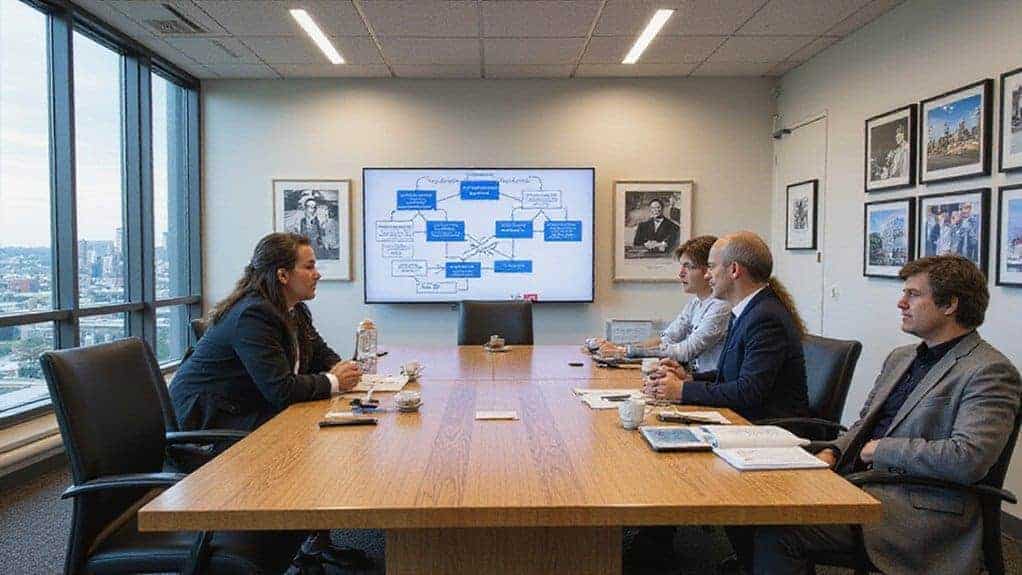
DCAA Organizational Structure and Regional Offices
Headquarters Authority and Oversight
The DCAA Director, operating under DoD Comptroller authority, controls all audit operations across the defense contracting sector. This centralized leadership ensures consistent audit standards and prevents fragmented oversight that could create compliance gaps.
Field Audit Execution
DCAA maintains Regional and Corporate Audit Offices strategically positioned throughout the United States. These offices execute field audits using standardized methodologies developed at headquarters. DCAA’s corporate audit directorates are responsible for overseeing audits of major contractors and complex procurement efforts.
When your organization undergoes a DCAA audit, the auditors come from one of these regional offices and apply the same audit procedures and standards regardless of geographic location.
Sole Audit Authority
DCAA holds exclusive responsibility for auditing federal defense contracts within DoD. No competing contract audit agencies operate within the department, eliminating jurisdictional confusion and ensuring singular audit authority throughout your contracting relationship.
Specialized Support Functions
The Director establishes subordinate organizational elements to handle specialized audit functions. These support units manage technical expertise, quality assurance, and emerging audit requirements across the DCAA network. Contractors should reference official compliance checklists provided by these specialized units to ensure alignment with current audit expectations.
Practical Implications for Contractors
This structure directly affects how you prepare for and manage audits. Since DCAA operates independently from procurement functions, audit findings don’t influence contract award decisions.
However, the centralized authority means audit standards applied to your organization align with standards applied across all defense contractors, creating predictable compliance requirements regardless of your location or contract type.
DCAA Audit Initiation: Procedural Framework and Documentation Requirements
How DCAA Audits Begin
Defense Contract Audit Agency audits don’t happen randomly. They follow a documented trigger system initiated primarily through two channels:
Government officials, such as contracting officers, play a key role in initiating DCAA audits based on contract milestones or compliance concerns.
Procuring Contract Officers (PCOs) and Administrative Contracting Officers (ACOs) submit formal audit requests based on specific contract milestones, red flags in cost submissions, or routine compliance cycles.
These requests flow through DCAA’s regional offices, which maintain standardized evaluation criteria to ensure consistency across the defense contracting industry. DCAA’s official homepage provides audit guidance and compliance standards that outline these regional office procedures and evaluation methodologies.
Documentation Standards You Must Meet
DCAA auditors will request access to contractor records that directly support every cost claim submitted. This includes:
- Timekeeping records and labor allocations. Direct costs should be traceable to a single contract to ensure accurate cost allocation and audit compliance.
- Material purchase documentation and receiving reports
- Overhead pool calculations and indirect cost allocations
- Subcontractor invoices and supporting documentation
- General ledger entries corresponding to claimed costs
The agency retains audit rights throughout contract performance and extends into the post-performance period, typically for three years following final invoice submission.
Auditors commonly discover compliance gaps during this extended review window when contractors assume oversight has concluded.
Proactive Preparation Strategy
Contractors who maintain organized, contemporaneous records avoid costly findings and questioned costs.
This means establishing record retention protocols aligned with DCAA timelines before audit notification arrives.
When you organize documentation systematically—segregating contract costs, maintaining clear audit trails, and ensuring mathematical accuracy—you reduce audit duration and auditor objections significantly.
Waiting until notification arrives to gather records typically results in incomplete reconstruction efforts and increased exposure to questioned costs.
DCAA Audit Types and Compliance Assessment Methods
Understanding Your Audit Engagement
When DCAA initiates an audit, you’ll face one of four primary audit types. Each targets specific compliance areas and requires distinct documentation and substantiation approaches. In the case of special audits, these may require an independent financial opinion to provide an impartial assessment of financial and contractual details. A special audit may be requested by contracting officers and can occur before or after a contract is awarded. Forward pricing audits analyze a contractor’s cost estimate before a contract is awarded. The Defense Contract Audit Agency conducts various types of audits that can occur at any time throughout the duration of a contract.
The Four Primary DCAA Audit Types
Pre-Award Audits
These audits occur before contract award and evaluate your proposed costs and accounting system capabilities. DCAA reviews whether your cost estimates are reasonable, allocable, and supported by your existing accounting infrastructure. A pre-award survey focuses on DCAA accounting policies and procedures and evaluates the adequacy of a contractor’s accounting system. Contractors must demonstrate that their systems can track and document costs throughout contract performance. Firm fixed price contracts are subject to different audit requirements compared to cost-reimbursable contracts, as the focus is often on proposal adequacy and pricing rather than ongoing cost tracking.
Contractors must demonstrate that their systems can track and document costs throughout contract performance. Firm fixed price contracts are subject to different audit requirements compared to cost-reimbursable contracts, as the focus is often on proposal adequacy and pricing rather than ongoing cost tracking.
Incurred Cost Audits
Incurred cost audits examine actual expenses you’ve claimed under contract performance. DCAA compares your claimed costs against supporting documentation—timesheets, invoices, material receipts, and labor allocation records. These audits assess a contractor’s allowable cost calculations after a contract has been awarded. These audits verify that costs were incurred, properly classified, and compliant with Cost Accounting Standards (CAS).
These audits verify that costs were incurred, properly classified, and compliant with Cost Accounting Standards (CAS).
Forward Pricing Audits
Forward pricing audits evaluate the estimated costs embedded in your pricing proposals. DCAA assesses whether your cost projections are realistic based on your historical performance data, accounting records, and current operational conditions.
This audit type influences your competitive position for future contract awards.
Special Audits
Special audits target identified risk areas: suspected fraud, inadequate system controls, or specific compliance concerns. These investigations go deeper than standard audits and may result in questioned costs or system deficiency findings.
Demonstrating Compliance Across Audit Types
Regardless of audit type, substantiation depends on three elements:
- Cost Accounting Standards adherence: Your cost allocation methodologies, indirect rate calculations, and cost segregation must follow CAS requirements.
- System controls documentation: Policies, procedures, and evidence showing how costs are captured, reviewed, and approved.
- Expenditure substantiation: Complete audit trails linking claimed costs to source documents—labor records, purchase orders, receiving reports, and invoices.
Your contract type and specific regulatory obligations determine which compliance methods apply. Cost-reimbursable contracts face more rigorous incurred cost scrutiny than fixed-price contracts.

DCAA’s Critical Role in Federal Defense Contracting
What DCAA Does
The Defense Contract Audit Agency operates as the Department of Defense’s independent audit authority. DCAA operates over 300 offices globally to facilitate its auditing services.
DCAA examines contractor accounting systems, validates costs claimed under government contracts, and assesses the reasonableness of pricing proposals. This function protects taxpayer interests by ensuring defense dollars are spent appropriately. The primary responsibility of the DCAA is to protect taxpayer money by ensuring that contractors comply with contract terms and conditions. The regulatory oversight role of the DCAA is crucial in managing contractor adherence to government contract compliance. Contractors can face both civil and criminal penalties for acting illegally or unethically in relation to compliance. DCAA has a significant impact on contract negotiations between government agencies and contractors, shaping the terms and ensuring fairness.
Understanding DCAA compliance fundamentals is essential for contractors seeking to maintain acceptable accounting practices throughout their contract lifecycle.
How DCAA Operates Within the Contracting Process
DCAA auditors work directly with contracting officers at multiple stages:
Pre-Award Phase
Procuring Contracting Officers (PCOs) request DCAA cost audits on contractor proposals before contract award.
DCAA examines proposed costs, labor rates, overhead allocations, and indirect cost structures. These findings directly influence pricing negotiations and help PCOs determine fair and reasonable pricing.
Post-Award Phase
Administrative Contracting Officers (ACOs) rely on DCAA surveillance audits during contract performance.
DCAA monitors contractor compliance with Cost Accounting Standards, reviews indirect cost rates, and flags compliance issues that could affect contract settlements.
DCAA’s Stakeholder Network
Military Departments and Commands
Receive audit services supporting their specific contracting activities and cost validation decisions across major acquisition programs.
Other Federal Agencies
Access DCAA audit services for non-DoD contracts when agencies lack internal audit capacity, extending DCAA’s role beyond defense procurement.
Educational Institutions and Nonprofits
Operate under DCAA cognizance when performing federally funded research.
DCAA ensures these organizations maintain accounting systems compliant with OMB Uniform Guidance requirements.
Defense Contractors
Undergo compliance assessments of their accounting systems. The DCAA makes recommendations to government officials about contractor performance and pricing negotiations. System inadequacies trigger corrective action requests or audit findings that affect future contract negotiations.
Undergo compliance assessments of their accounting systems.
System inadequacies trigger corrective action requests or audit findings that affect future contract negotiations.
Defense Contract Management Agency (DCMA)
Oversees contractor performance, ensures compliance, and manages aspects of contract execution for the Department of Defense. DCMA works alongside DCAA and contracting officers to support effective contract administration.
Why This Structure Matters
DCAA’s independence from procurement decision-makers—combined with direct access to contracting officials—creates an effective checks-and-balances system within federal spending. Certain critical determinations, such as contract awards or exceptions, may require approval from the agency head, whose authority is nondelegable in these matters.
The agency’s findings become contractual evidence in disputes and provide the factual foundation for negotiated settlements.
Frequently Asked Questions
What Are the Consequences if a Contractor Fails to Comply With DCAA Audit Requirements and Findings?
Financial Penalties and Payment Disruption
When contractors fail to meet DCAA audit requirements, the Defense Contract Audit Agency exercises immediate financial leverage. The government withholds payments on submitted invoices—sometimes for extended periods—until compliance issues are resolved. This isn’t a theoretical threat; it’s standard practice. Civil penalties for noncompliance can include financial restitution of up to three times the damage caused.
The government withholds payments on submitted invoices—sometimes for extended periods—until compliance issues are resolved. This isn’t a theoretical threat; it’s standard practice. Companies operating on tight cash flow margins face operational strain within weeks of payment suspension. Criminal penalties for noncompliance can include imprisonment for the person responsible for cost and pricing data issues.
Companies operating on tight cash flow margins face operational strain within weeks of payment suspension.
Contract Termination Risk
Non-compliance triggers two distinct termination pathways:
Termination for Default occurs when you breach contract terms, including audit cooperation requirements.
The government can terminate immediately without waiting for corrective action periods.
Termination for Cause applies when systemic audit failures demonstrate inability to maintain compliant accounting systems.
Unlike default termination, cause termination may allow contractor recovery claims, but the reputational damage remains severe.
Loss of Contracting Eligibility
DCAA findings create a permanent record within federal procurement systems.
Subsequent bid evaluations factor in your audit history.
Agencies conducting pre-award surveys explicitly investigate past DCAA findings.
Companies with unresolved compliance issues lose competitive advantage or face outright contract award denials. In most cases, debarred contractors’ solicitation bids and proposals are generally disqualified from consideration across all government agencies unless exceptional approval is granted. Noncompliance may lead to contractors being listed in the Excluded Parties List System (EPLS), which prevents future bids.
Legal and Regulatory Exposure
Serious non-compliance invokes Federal Acquisition Regulation (FAR) provisions enabling government legal action.
This includes contract recovery claims, false claims investigations (if audit issues involve billing disputes), and debarment proceedings that exclude contractors from all federal work.
Reputational Deterioration
DCAA audit findings circulate through government contracting networks.
Contracting officers share information, and your compliance history becomes institutional knowledge affecting all future government opportunities.
How Can Contractors Proactively Prepare Accounting Systems to Meet DCAA Compliance Standards?
Establish Robust Internal Controls Aligned with GAGAS and CAS
Your accounting infrastructure must reflect both Generally Accepted Government Auditing Standards (GAGAS) and Cost Accounting Standards (CAS). This means moving beyond basic bookkeeping to create layered verification systems.
Document how costs flow through your organization—from initial capture through final reporting. Your internal controls should specify who approves transactions at each stage, what documentation triggers payment, and how exceptions are flagged and resolved. Contractors must inform the cognizant Federal agency official (CFAO) about any changes to their cost accounting practices that may affect compliance with CAS.
Implement Detailed Cost Allocation Methodologies
Develop cost pools that directly correspond to your contract types and organizational structure. Your allocation bases must be defensible and consistently applied.
For example, if you allocate indirect costs based on direct labor hours, that methodology should appear identical across all contracts and remain unchanged unless you formally justify and document a modification. Create written cost allocation plans that auditors can follow without interpretation.
Document Policies Comprehensively
Write policies that address:
- How you classify direct versus indirect costs
- When charges transition between cost categories
- Procedures for handling unallowable costs
- Timekeeping and labor distribution protocols
- Approval workflows and authorization limits
Ensure these policies exist in writing before you need them during an audit, not created retroactively to explain past practices.
Train Staff on Compliance Procedures
Your accounting team must understand *why* policies exist, not just *that* they exist. Train employees on recognizing unallowable costs, understanding timekeeping requirements, and following approval hierarchies.
Include compliance training during onboarding and refresh it annually or when procedures change.
Conduct Regular Internal Audits
Schedule quarterly or semi-annual internal reviews of compliance areas. Test timekeeping records, verify cost allocations are applied consistently, and confirm that segregation of duties is maintained.
Document findings and corrective actions taken. This creates an audit trail demonstrating your commitment to compliance.
Maintain Segregation of Duties
Ensure that no single person can approve a transaction, record it, and reconcile it. Your billing manager shouldn’t also approve timesheets or cost transfers.
This reduces fraud risk and strengthens your control environment during government audits.
Guarantee Transaction Traceability
Every charge to a government contract should have a complete audit trail: the supporting invoice or timesheet, approval documentation, cost allocation calculation, and final posting to the accounting system.
An auditor should be able to trace any number backward to its source and forward to final reporting.
Consult DCAA Resources Continuously
Review the DCAA Audit Guidance regularly—not just once during implementation. The standards and expectations evolve, and your systems should reflect current interpretations.
Bookmark the official DCAA website and subscribe to updates from your contracting officers.
Establish Audit-Ready Documentation Systems
Organize your files so that an auditor can locate supporting documentation within minutes, not hours. Create standardized file naming conventions, maintain organized cost allocation workpapers, and keep approval chains intact.
Digital systems with search capabilities reduce audit friction significantly.
Engage Experienced Government Contract Professionals
Work with accountants or consultants who’ve direct DCAA audit experience. They identify vulnerabilities before auditors do and help you understand which compliance areas require the most rigor for your specific business model.
Their expertise becomes your organization’s asset.
—
This approach treats compliance as an operational requirement, not an annual burden. When your systems are built around DCAA standards from inception, audits become verification exercises rather than discovery missions.
What Specific Fraud Detection Procedures Must DCAA Auditors Follow During Contract Audits?
Core Audit Framework
DCAA auditors operate under specific fraud detection protocols detailed in the DCAA Contract Audit Manual. These procedures function as a systematic framework rather than discretionary guidelines—they are mandatory components of every contract audit engagement.
Required Detection Techniques
Documentation Verification
Auditors examine supporting documentation against recorded transactions with particular scrutiny toward:
- Invoice authenticity and authorization chains
- Time card allocations and labor hour substantiation
- Material procurement documentation and pricing justification
- Subcontractor billing and performance records
Transaction Analysis
Auditors apply standardized audit techniques to flag patterns indicating potential irregularities:
- Duplicate payments or circular transactions
- Unusual vendor relationships or payments to shell entities
- Transactions lacking proper authorization or approval hierarchies
- Expense categorizations inconsistent with contract terms
Escalation Protocol
When auditors identify suspicious activity, they document findings in specific formats required by the DCAA framework. These escalations move through defined channels—typically to contracting officer representatives, then to appropriate government agencies when fraud indicators warrant investigation.
Organizational Preparation Requirements
Your accounting records must demonstrate:
- Clear transaction trails linking original documentation to recorded amounts
- Consistent approval hierarchies with evidence of authorization
- Accurate cost classifications aligned with contract specifications
- Complete audit trail retention supporting all recorded transactions
The strength of your internal controls directly determines whether auditors identify legitimate business activity or flag transactions requiring extended investigation.
How Long Can DCAA Audit Contractor Records After Contract Performance Completion?
Direct Answer
The Defense Counterintelligence and Security Agency (DCAA) can audit contractor records for up to 6 years following final payment on a contract, though specific timeframes depend on contract type, cost accounting standards applicability, and individual contract clauses.
Regulatory Framework
Federal Acquisition Regulation (FAR) Requirements:
- Contractors must retain records for a minimum of 6 years following final invoice payment.
- DCAA maintains audit rights during this entire retention period.
- The 6-year clock begins after final contract closeout, not contract performance end.
Contract Clause Provisions:
FAR 52.215-2 (Audit and Records – Negotiation) explicitly grants DCAA the right to examine all records related to the contract, including those maintained post-performance.
This access extends through the full record retention obligation period.
Practical Timeline Considerations
Performance Phase:
DCAA can conduct incurred cost audits while work is ongoing.
Post-Performance Window:
- Contractors should expect audit activity within 2-3 years after final payment.
- DCAA may initiate audits later in the 6-year window, particularly for questioned costs or compliance reviews.
- Some audits may extend beyond 6 years if deemed necessary for significant findings.
Documentation Requirements
Maintain records covering:
- Labor and overhead allocations.
- Material costs and procurement practices.
- Subcontractor payments and compliance.
- Cost accounting practices and system documentation.
Consult your specific contract’s audit clause and DCAA Contract Audit Manual (CAM) Chapter 8 for obligations tailored to your contract type and cost accounting standards application.
What Qualifications and Expertise Should Contractors Employ for Government Contract Management?
Core Competencies Required
Government contractors must build teams with demonstrable expertise across three critical areas:
Government Contract Accounting
Staff managing government contracts need hands-on experience with cost accounting principles specific to federal work. This means understanding how to properly allocate direct and indirect costs, manage cost pools, and maintain audit trails that withstand DCAA scrutiny. Contractors must demonstrate adequate training on timekeeping practices to avoid compliance issues during audits.
Government Contract Accounting
Staff managing government contracts need hands-on experience with cost accounting principles specific to federal work. This means understanding how to properly allocate direct and indirect costs, manage cost pools, and maintain audit trails that withstand DCAA scrutiny.
Personnel should have completed actual contract accounting cycles—not just theoretical knowledge.
Regulatory Compliance Frameworks
Your team must operate fluently within:
- Federal Acquisition Regulation (FAR): The governing ruleset for all federal contracts
- Defense Federal Acquisition Regulation Supplement (DFARS): Additional requirements for Department of Defense work
- Cost Accounting Standards (CAS): Mandatory for contracts exceeding specified thresholds
Contractors who’ve managed contracts through compliance challenges understand that regulatory violations often stem from process gaps, not intentional misconduct.
DCAA Audit Readiness
Defense Contract Audit Agency audits are inevitable for most government contractors. Your personnel should include individuals with:
- Firsthand experience responding to DCAA audit inquiries
- Knowledge of documentation standards DCAA reviewers expect
- Understanding of internal control systems that satisfy federal auditors
Why This Matters
Proper staffing prevents costly audit findings, supports defensible cost claims during disputes, and reduces compliance risks throughout contract performance and closeout.
Contractors who skimp on these qualifications typically face audit delays, questioned costs, and damaged relationships with contracting officers.