
DCAA standards require you to record work time daily—not weekly or retroactively—because this practice creates defensible audit trails that protect both your compliance status and your contract. To achieve DCAA compliance, contractors must implement daily timekeeping procedures, prepare for unannounced DCAA audits, and follow all DCAA requirements. This article covers why daily logging matters, the legal implications of timesheet attestation, what happens when you fail to comply, and how monitoring systems help you avoid costly violations.
When you sign your timesheet, you’re legally attesting to its accuracy, which means you own that data completely. Practical solutions, such as adopting modern timekeeping software, help streamline compliance and reduce administrative burden. Maintaining compliance not only protects contracts but also supports strong contract performance and helps avoid the risk of contract termination. Compliance failures trigger questioned costs, payment suspensions, and contract jeopardy. The system controls monitoring your entries exist for a reason: they catch the violations most contractors don’t realize they’re committing until auditors arrive with findings that cost real money.
Introduction to DCAA Compliance
DCAA compliance is the foundation of successful government contracting. The Defense Contract Audit Agency (DCAA) sets strict standards to ensure that government contractors maintain accurate and complete records, properly track labor costs, and follow rigorous timekeeping procedures. These requirements are designed to safeguard taxpayer funds and uphold the integrity of government projects. Additionally, the DCAA requires all timekeeping records to be readily available during audits, ensuring transparency and accountability.
For government contractors, achieving DCAA compliance means more than just following rules—it’s about building trust with federal agencies and protecting your business from costly penalties. Using DCAA compliant timekeeping software is essential for meeting these standards, as it helps automate recordkeeping, enforces daily entry, and supports audit readiness. By understanding and implementing DCAA timekeeping requirements, contractors can avoid non compliance issues, streamline audits, and ensure their timekeeping software supports every aspect of compliance. Ultimately, a proactive approach to DCAA timekeeping not only protects your contracts but also positions your company for long-term success in the government sector.
The Mandate for Daily Time Recording and Its Importance
Federal Contractors Must Track Time Daily
Because federal contractors operate under Department of Defense Cost Accounting Standards, you’re required to record your time daily—not weekly, not when you remember, but every single day you work. Daily recording ensures all DCAA compliant time is accurately captured for each specific project, supporting audit readiness and federal contract requirements. Daily time reporting must include specific start and end times, project codes, and task descriptions that identify the work performed. Indirect labor, such as HR or IT support, must also be tracked separately to ensure proper cost allocation and compliance.
Daily Tracking Builds Compliance Foundation
Daily tracking isn’t bureaucratic busywork; it’s the foundation of compliance that keeps your contracts viable and your company’s reputation intact.
By requiring accurate, real-time entries, daily tracking helps reduce human error and prevent fraud, supporting robust internal controls and maintaining data integrity.
Consistent Logging Creates Defensible Records
When you log hours consistently, you create an accurate, defensible record that auditors can trust. Consistent logging allows organizations to maintain historical records and a detailed audit log, providing an unalterable history of all time-related activities essential for compliance and audit readiness.
Retroactive entries invite scrutiny and risk.
Timekeeping Discipline Protects Against Penalties
After-the-fact reconstruction of time entries is prohibited under DCAA standards and represents a significant compliance deficiency that can result in questioned costs and contract payment withholdings during audits. Repeated violations may lead to severe consequences, including even contract termination.
Why After-the-Fact Time Reconstruction Is Prohibited
Now that you’ve established daily tracking as your compliance baseline, you’ll encounter a critical restriction that separates legitimate timekeeping from practices that trigger audit failures: after-the-fact time reconstruction isn’t permitted under DCAA standards.
Reliance on manual processes increases the risk of non-compliance and audit failures, making it essential to adopt more accurate and reliable timekeeping methods.
Audit Trail Elimination
Reconstructing time retroactively without documentation destroys the verifiable record DCAA requires for compliance validation. Systems that allow supervisors or administrators to alter employee time without documented authorization are automatically flagged as non-compliant by DCAA auditors.
Escalating Fraud Exposure
Undocumented, excessive after-the-fact corrections create liability that auditors flag as intentional misreporting rather than administrative error.
Compliance Verification Gaps
Entries lacking real-time accuracy checks fail to meet the contemporaneous documentation standards that prevent timesheet disputes.
Disallowed Cost Consequences
Financial penalties follow when reconstructed timesheet entries are rejected during cost allocation reviews and contract audits.
Contractual and Legal Risks
After-the-fact time manipulation can trigger contract suspension, mandatory repayment obligations, and regulatory investigation. Repeated or severe violations of DCAA compliance standards can ultimately result in contract termination.
Authorized Exception Protocol
Only documented exceptions—errors or absences with immediate authorization recording—remain permissible under DCAA requirements. Supervisors may only enter time in exceptional circumstances, such as employee illness or travel, and must provide a valid reason for any deviation from standard procedures.
Employee Certification: What You Attest to When Signing Timesheets
The Legal Weight of Your Signature
When you sign or electronically certify your timesheet, you’re making a legal attestation that carries real consequences—not just acknowledging that hours look reasonable, but affirming under penalty of law that every entry is accurate, complete, and honestly reported.
Your Personal Responsibility for Accuracy
You’re personally responsible for the certification process and accuracy verification of your own data. This isn’t a formality. You’re confirming that you logged time daily, allocated hours correctly to specific projects, and reported everything truthfully. Employees are responsible for certifying their own time records and ensuring their employees timesheets accurately reflect all hours worked, including paid time and overtime. Your certification serves as the foundation for cost-reimbursable contract billing and directly impacts your organization’s compliance standing during audits.
No Delegation Allowed
No surrogate sign-offs exist—the certification is yours alone. Employees must verify how many hours they have worked each day and ensure all paid time is properly recorded.
Real Consequences of Falsification
Falsifying timesheets can trigger legal action, financial penalties, and career damage.
Common Timekeeping Violations and Why They Matter
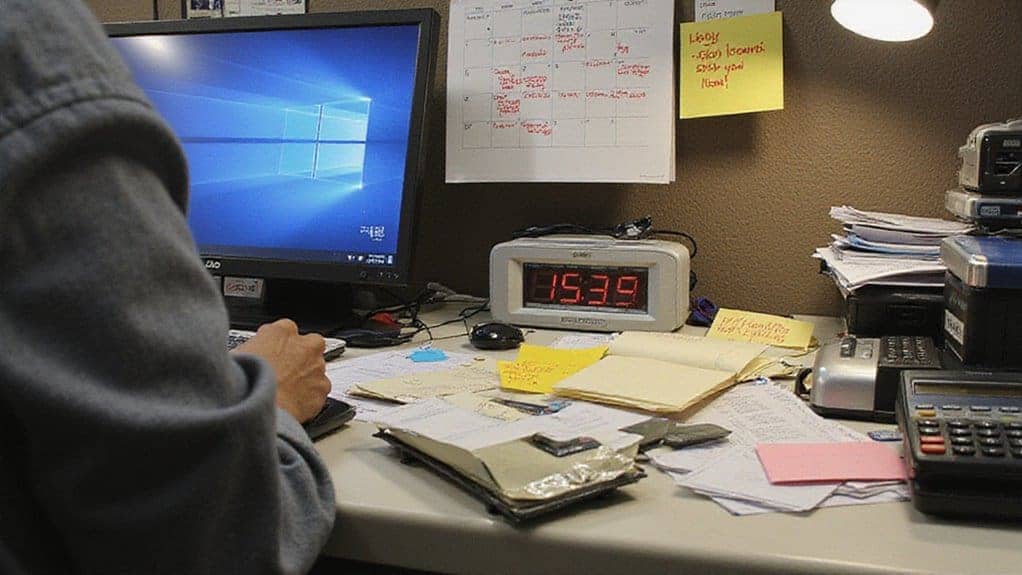
Understanding what you’re attesting to when you sign your timesheet is only half the battle—the other half is recognizing the specific violations that auditors flag most often and why they matter beyond compliance paperwork.
Most Flagged Timekeeping Errors
- Retroactive time entries logged days or weeks later
- Vague project descriptions lacking contract specifics
- Supervisors altering employee hours without documentation
- Missing employee signatures or certifications
- Undocumented timesheet corrections
- Lack of clear procedures for approving timesheets or missing documentation that supervisor approval confirms the accuracy of entries.
Why Violations Matter Beyond Compliance
These compliance risks don’t just trigger audit findings—they expose your company to disallowed costs, contract penalties, and legal scrutiny.
Auditors view systematic violations as potential fraud indicators, not innocent mistakes. You’re protecting your organization’s reputation and financial standing when you follow protocols precisely. Strict adherence to these protocols helps prevent fraud and maintain data integrity, which is essential in government contracting.
Supervisors must also ensure segregation of duties is maintained, meaning they cannot approve their own timesheets and approval authority must align with organizational structure to prevent conflicts of interest and unauthorized cost allocations.
Audit Consequences: Questioned Costs and Contract Payment Withholdings
When your timekeeping fails DCAA audit scrutiny, you’re not just facing a documentation problem—you’re risking questioned costs that auditors will disallow from your contract billings, possibly recouping thousands in labor charges you’ve already claimed.
Only approved timesheets with proper documentation are accepted during audits, ensuring control, traceability, and compliance with regulatory requirements.
If violations are systemic or severe enough, the government can suspend or withhold your contract payments entirely until you’ve illustrated corrective action, effectively freezing cash flow and threatening your contract’s viability.
You’ll want to understand that even unintentional timekeeping errors compound quickly; one employee’s backdated entries or missing project codes can trigger broader audit findings that put your entire compliance posture under heightened scrutiny.
Common deficiencies like lack of daily time entry, retroactive changes without documentation, and supervisor-entered time create cumulative audit exposure that expands far beyond individual errors.
Because these financial and operational consequences demand immediate intervention, implementing robust preventive controls—rather than reactive remediation—becomes essential to safeguard both your cash flow and your government contract standing.
Questioned Costs and Disallowances
Your Timekeeping Practices Determine Billable Revenue
Because your timekeeping practices directly determine what costs you can bill to federal contracts, improper time documentation creates a cascading consequence: questioned costs and disallowances that can strip revenue from your invoices and contracts.
DCAA compliant time tracking systems help ensure all billable hours are properly documented and reduce the risk of questioned costs.
What Auditors Flag as Questioned Costs
When auditors identify timekeeping deficiencies, they flag those expenses as questioned costs. You’ll then face:
- Retroactive time entries lacking daily documentation
- Undetailed or generic project descriptions
- Missing employee certifications or supervisor approvals
- Undocumented after-the-fact corrections
- Excessive late timesheet submissions
Financial Impact of Disallowed Expenses
Disallowed expenses get removed entirely from billable amounts. You don’t recover that revenue.
The financial impact compounds quickly across multiple pay periods, possibly affecting contract profitability and future government work eligibility.
Contract Payment Suspension Risk
Questioned Costs Drive Real Payment Holds
Questioned costs don’t stay theoretical—they translate into real payment consequences that can halt your cash flow and jeopardize your government contract portfolio.
DCAA Timekeeping Violations Trigger Immediate Withholding
When DCAA auditors discover timekeeping violations, agencies don’t just flag problems; they withhold payment until you’ve corrected the issues.
Contract Eligibility Becomes Vulnerable
Your contract eligibility itself becomes vulnerable. Systematic compliance penalties can escalate quickly, possibly suspending future contract awards entirely.
Recovery Requires Months of Remediation
Even worse, recovery takes months of remediation and documentation.
The Cascading Impact of Timekeeping Failures
One timekeeping failure cascades into delayed payments, mandatory corrective action plans, and reputational damage that affects your ability to compete for new government work.
System Controls and Documentation Requirements for Compliance
Access Control and Authentication
Restrict access through secure login credentials and role-based permissions. Robust security protocols, including role-based access controls and encryption, are essential for protecting sensitive timekeeping data.
Automated Change Tracking
Log all changes automatically with timestamps, usernames, and reasons.
Mandatory Entry Submission
Enforce daily entry requirements with system prompts.
Electronic Certification Process
Require electronic certification before timesheet submission.
Compliance Monitoring
Generate audit reports monthly to catch anomalies early. These controls establish the labor cost tracking foundation necessary for government contract compliance and accurate billing.
Best Practices for Effective Timekeeping
To achieve and maintain DCAA compliance, government contractors must adopt best practices that ensure accurate time tracking and reliable recordkeeping. Start by implementing a robust time tracking system that enforces daily entries, supports secure approval workflows, and maintains a clear audit trail. A compliant timekeeping system should prompt employees to record their hours in real time and prevent unauthorized changes, reducing the risk of errors or fraud.
Comprehensive employee training is equally important. All staff should understand timekeeping procedures, DCAA requirements, and how to use the timekeeping system effectively. Regular internal audits and management reviews help identify potential issues before they escalate, ensuring consistent compliance and complete records. Additionally, maintaining thorough documentation of all time entries, approvals, and corrections is vital for audit readiness. Cloud-based time tracking solutions can help firms maintain centralized, easily accessible records during audits, further enhancing compliance efforts.
By following these best practices—leveraging technology, prioritizing training, and conducting ongoing reviews—government contractors can demonstrate their commitment to accurate and complete records, minimize the risk of non compliance, and build a strong foundation for DCAA compliance.
Cost Objectives and Timekeeping
Accurate timekeeping is essential for meeting DCAA compliance standards, especially when it comes to tracking labor costs against specific cost objectives. Every hour worked must be properly allocated to the correct project or cost objective, ensuring transparency and accountability in government contract billing. A modern timekeeping system should support detailed cost allocation, automated alerts for missing or late entries, and clear approval procedures to prevent mischarges. Internal controls should limit access based on employee roles to ensure data integrity, further safeguarding compliance.
Maintaining historical records—including timesheet data and comprehensive audit logs—is critical for demonstrating compliance with DCAA timekeeping regulations. These records provide the supporting documentation needed during audits and help verify that labor costs are accurately assigned to each project. Companies must maintain historical records for the required retention period, typically three years or more. Automated audit logs also make it easier to track changes, approvals, and corrections, reducing the risk of non compliance and supporting consistent, defensible project costs.
By focusing on precise cost allocation and robust recordkeeping, government contractors can align their timekeeping procedures with DCAA requirements, safeguard their contracts, and ensure that every labor dollar is properly documented and justified.
Corrective Action and Remediation Following Timekeeping Deficiencies
Understanding the Remediation Framework
When DCAA auditors identify timekeeping deficiencies during a compliance review, you’re not facing a simple checkbox correction—you’re entering a structured remediation process that’ll reshape how your organization tracks and reports labor costs. DCAA’s official checklists provide the specific audit criteria that your remediation efforts must address to demonstrate full compliance.
Addressing Root Causes
Your corrective measures must address root causes, not just symptoms.
Implement remediation strategies that include mandatory staff retraining, system upgrades, and enhanced supervisory oversight.
Documentation and Verification Requirements
You’ll need documented evidence showing how you’ve fixed the problem.
DCAA typically demands corrective action plans with specific timelines, responsible parties, and verification methods.
Consequences of Inadequate Remediation
This isn’t optional—failure to remediate adequately risks contract suspension, financial penalties, and increased audit scrutiny going forward.
Frequently Asked Questions
Can a Supervisor Enter Time on Behalf of an Employee if the Employee Is Unavailable?
1. What happens if an employee doesn’t enter their own time due to illness or emergency?
Employees must enter their own time upon return with proper documentation explaining the delay. Supervisors can’t retroactively fill in timesheets, even in cases of illness or emergency. The documentation serves as the audit trail required by DCAA regulations.
2. Are there any exceptions to the DCAA prohibition on supervisor timesheet entry?
No. DCAA regulations explicitly prohibit supervisor authority to enter time on an employee’s behalf without exception, regardless of circumstances or employee absence duration.
3. Why does DCAA require employees to log their own hours?
Employee-entered time maintains audit integrity and ensures compliance with federal contracting regulations. This separation of duties protects against timesheet fraud and maintains the documentation standards required during government audits.
4. What’s the proper procedure for delayed timesheet submission under DCAA rules?
Employees must enter their time upon return and include proper documentation explaining the reason for the delay. This creates an official record that satisfies DCAA audit requirements.
5. Can a supervisor approve timesheets they didn’t personally enter?
While supervisors can’t enter time on behalf of employees, they can review and approve timesheets that employees have personally completed and submitted with appropriate documentation.
6. What compliance risks arise from supervisor timesheet entry?
Allowing supervisor timesheet entry violates DCAA regulations and creates audit vulnerabilities, potentially resulting in compliance violations, questioned costs, and contract penalties during government audits.
7. How should employees document unavoidable absences affecting timesheet entry?
Employees should submit documentation explaining the absence (medical emergency, system outage, etc.) along with their timesheet upon return. This documentation becomes part of the official time record for audit purposes.
What IT Security Standards Must Electronic Timekeeping Systems Comply With?
Q: What federal IT security standards apply to electronic timekeeping systems for government contractors?
A: Government contractors must comply with NIST Cybersecurity Framework, FISMA (Federal Information Security Modernization Act), and DFARS (Defense Federal Acquisition Regulation Supplement) requirements, which mandate data encryption, access controls, audit trails, and secure authentication protocols for all timekeeping data.
Q: How should data encryption be implemented in timekeeping systems?
A: Electronic timekeeping systems require encryption both in transit (using TLS/SSL protocols) and at rest (using AES-256 or equivalent standards).
All employee time entries, personal data, and access credentials must be encrypted to prevent unauthorized data access or interception.
Q: What constitutes proper access controls for employee timekeeping records?
A: Access controls should implement role-based permissions limiting record visibility to authorized personnel only, multi-factor authentication for system entry, password policies meeting federal standards, and segregation of duties preventing single-user control over critical timekeeping functions.
Q: Why are audit trails essential for timekeeping system compliance?
A: Audit trails create comprehensive logs of every system access, modification, and deletion, enabling compliance verification, forensic investigation of security breaches, detection of unauthorized changes to time records, and demonstration of system integrity during compliance audits.
Q: What’re the penalties for non-compliance with timekeeping security standards?
A: Non-compliance can result in financial penalties ranging from thousands to millions of dollars, contract suspension or termination, loss of federal contracting eligibility, legal liability for data breaches, and reputational damage affecting future business opportunities.
Q: How often should electronic timekeeping systems undergo security assessments?
A: Federal compliance requirements typically mandate annual security assessments, continuous monitoring, incident response testing, and vulnerability scans at minimum.
Additional assessments are required after system changes or security incidents.
Q: What database security measures protect timekeeping information?
A: Protected timekeeping databases require encryption, automated backups with secure storage, access logging, SQL injection prevention, regular patching, segregation from public-facing systems, and disaster recovery protocols meeting federal standards.
How Long Should Audit Trails Retain Documentation of Timesheet Changes and Corrections?
1. What’s the recommended timeframe for retaining timesheet audit trails under DCAA compliance?
Most federal contractors maintain timesheet audit trail records for seven years, aligning with federal tax documentation standards.
While DCAA regulations don’t explicitly mandate a specific retention period, this timeframe provides defensible evidence during audits and satisfies IRS requirements.
2. Can I delete timesheet corrections after a certain period if I maintain summary records?
No. You should retain complete documentation of timesheet changes and corrections indefinitely, or at minimum comply with your specific federal contract terms.
Deleting corrections—even with summaries available—undermines audit defensibility and creates compliance gaps.
3. What documentation must be included in a timesheet audit trail for federal contractors?
Your audit trail should document all timesheet changes, corrections, and adjustments, including who made the change, when it occurred, and the reason for modification.
This creates a comprehensive record that protects your organization during federal audits.
4. How does federal contract language affect my timesheet retention obligations?
Your individual federal contract may impose stricter retention requirements than the standard seven-year federal tax guideline.
Always review your specific contract terms, as they take precedence over general DCAA recommendations.
5. What happens if my organization can’t produce timesheet corrections during a DCAA audit?
Inability to produce documented corrections creates audit vulnerabilities and may result in questioned costs, compliance findings, or contract penalties.
Comprehensive audit trails provide the defensible evidence needed to justify timesheet adjustments.
6. Is indefinite retention of timesheet audit trails necessary for DCAA compliance?
While not explicitly required by DCAA, indefinite retention is recommended as best practice.
At minimum, maintain records for seven years; however, longer retention periods provide stronger protection against future audits or contract disputes.
Can Payroll Staff Approve Timesheets or Must Supervisors Handle All Approvals?
Q1: Why can’t payroll staff approve employee timesheets in DCAA-compliant organizations?
A: Payroll staff can’t approve timesheets because DCAA compliance requires strict separation of duties. Allowing payroll to approve timesheets creates a control weakness where the same department that processes compensation also authorizes hours worked, increasing fraud risk.
Supervisors must approve timesheets since they directly oversee employee work and can verify accuracy.
Q2: What percentage of companies face DCAA audit failures related to timesheet approval violations?
A: Approximately 60% of companies fail DCAA audits due to approval hierarchy violations, including improper timesheet authorization procedures.
This makes timesheet approval structure one of the most critical compliance areas for government contractors.
Q3: What’s the difference between supervisor approval and payroll approval in timesheet workflows?
A: Supervisor approval validates that hours worked are accurate and authorized based on direct knowledge of employee activities.
Payroll approval processes compensation calculations and payment execution. These functions must remain separate—supervisors authorize time, payroll processes payment.
Q4: How should companies document timesheet approvals to maintain DCAA compliance?
A: Companies must document all timesheet approvals promptly with timestamps, approver names, and approval dates.
Electronic records should be retained with audit trails showing who approved what and when, creating an auditable approval history that demonstrates proper authorization controls.
Q5: What’re the penalties for allowing payroll staff to approve timesheets on government contracts?
A: Violations can result in audit failures, contract suspension, recovery of questioned costs, and potential fraud investigations.
These penalties extend beyond financial consequences to damage company reputation and eligibility for future government work.
Q6: Can a single employee perform both supervisor and payroll functions for timesheet approval?
A: No. Effective internal controls require different individuals to handle approval and processing functions.
Role separation prevents one person from authorizing and processing their own or others’ timekeeping records, a critical fraud prevention measure.
Q7: What documentation should support timesheet approval authority separation?
A: Organizations should maintain written policies defining supervisor approval responsibilities, payroll processing duties, and the prohibition against payroll staff approving hours.
Training records and role assignments should clearly demonstrate the separation of duties framework.
What Documentation Is Required When Correcting a Timesheet Error Weeks Later?
1. What information must be included when documenting a late timesheet correction?
Late timesheet corrections require documentation of the original entry, specific correction details, authorization approval with signature, and clear business justification explaining why the correction occurred weeks later. This creates a complete audit trail necessary for compliance purposes.
2. How long after initial entry can you correct a timesheet without triggering audit concerns?
While corrections can technically occur weeks later, the longer the delay, the more critical your documentation becomes. DCAA reviews scrutinize late corrections intensely, making comprehensive record-keeping essential to prevent disallowed costs or contract penalties.
3. Who needs to authorize timesheet revisions for DCAA compliance?
An authorized manager or supervisor must approve all timesheet revisions. Their signature and documented authorization are mandatory components of the audit trail and serve as proof of legitimate correction versus unauthorized cost manipulation.
4. What’re the consequences of correcting timesheets without proper documentation?
Inadequate documentation of timesheet corrections can result in disallowed costs, contract penalties, and fraud allegations during DCAA audits. Proper audit trails protect both your company and demonstrate good-faith compliance efforts.
5. Why is business justification required for timesheet error corrections?
Business justification documents the legitimate reason for the late correction—whether it was clerical error, system issues, or overlooked time. This explanation distinguishes honest corrections from potential fraudulent activity during regulatory reviews.
6. How should revised timesheet procedures capture correction history?
Documented procedures must record the change itself, timestamp of correction, original data, new data, authorizing personnel, and business rationale. This comprehensive capture creates defensible records during compliance audits.
7. What audit trail elements protect against DCAA disallowance claims?
Complete audit trails include original entries, correction specifics, authorization signatures, business justification, and timestamps. These elements collectively demonstrate transparency and proper controls, reducing disallowance risk.